





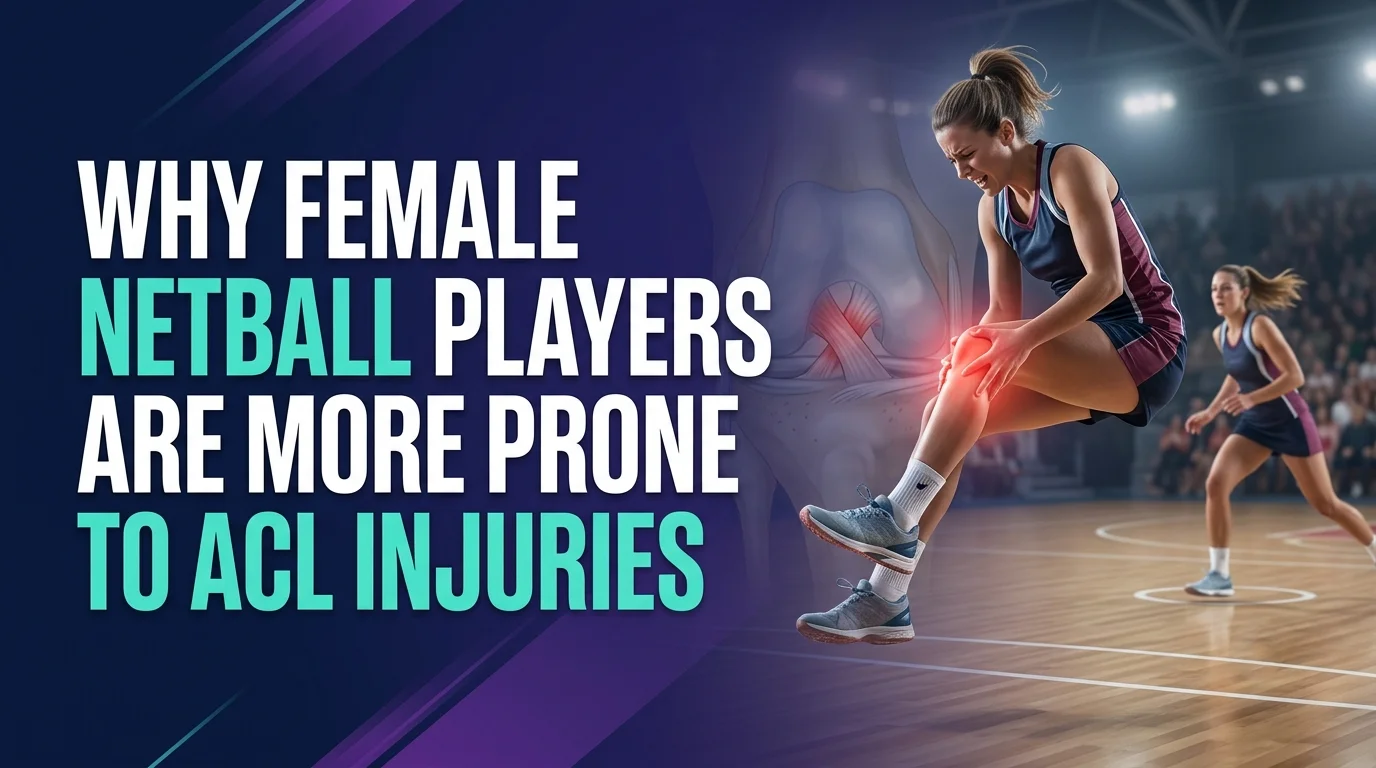
ACL injuries are among the most serious and frequently occurring injuries in women’s sport, with netball being one of the highest-risk activities. The anterior cruciate ligament (ACL) plays a vital role in stabilising the knee, allowing players to pivot, jump, land and change direction quickly—movements that are fundamental to the game.
Because netball is built around explosive acceleration, rapid deceleration and sharp directional changes, many ACL injuries occur without any physical contact. Players often experience immediate pain, swelling and instability in the knee, with rehabilitation typically lasting between nine and 12 months, depending on the severity of the injury. For athletes aiming to return to sports that involve frequent pivoting, reconstructive surgery is often necessary.
Research consistently shows that female athletes are significantly more susceptible to ACL injuries than males, with women estimated to be three to eight times more likely to sustain the injury. The increasing number of ACL injuries among teenage girls has also sparked greater focus on injury prevention and female athlete health.
Why Are Women More at Risk?
Experts believe there is no single cause behind the higher rate of ACL injuries in women. Instead, several biological and movement-related factors work together to increase the risk.
Anatomy and Knee Alignment
Women generally have a wider pelvis, which affects the alignment of the hips, knees and legs. This creates a larger “Q angle”—the angle between the hip and knee—which can place additional stress on the knee during movements such as jumping, landing and cutting. In a fast-paced sport like netball, these repeated actions can increase the likelihood of ACL injury.
Hormonal Influences
Hormonal fluctuations may also contribute to injury risk. Studies suggest that changes in oestrogen levels throughout the menstrual cycle can influence ligament flexibility, muscle control and overall knee stability. Increased ligament laxity may reduce the knee’s ability to withstand sudden, high-impact movements.
Movement Mechanics
Research has found that female athletes often demonstrate different movement patterns compared to males, particularly during jumping and landing. Women may rely more heavily on their quadriceps than their hamstrings, increasing the load placed on the ACL. Poor landing technique, muscle imbalances and reduced neuromuscular control can further elevate the risk of injury.
Can ACL Injuries Be Prevented?
While ACL injuries cannot always be avoided, evidence shows that structured injury prevention programmes can reduce the risk by up to 50% in female athletes.
Effective prevention programmes typically include:
- Strength training
- Balance and stability exercises
- Neuromuscular training
- Education on proper movement techniques and injury prevention
Improving landing mechanics, strengthening key muscle groups and enhancing body control can significantly reduce stress on the knee, particularly in sports like netball where rapid changes in direction are common.
Protecting Your Knees
Players can also take simple steps to help lower their risk of ACL injury:
- Warm up thoroughly before training and matches.
- Strengthen the glutes, hamstrings and core muscles.
- Incorporate balance, mobility and flexibility exercises into training.
- Wear supportive footwear suitable for netball.
- Allow adequate recovery time after injuries and avoid returning to play too early.
Supporting Long-Term Participation
As women’s sport continues to grow, increased research and awareness are helping athletes better understand injury prevention and long-term health. Knowing the causes of ACL injuries—and taking proactive steps to reduce the risk—can help players stay active, perform at their best and enjoy the game for years to come.
Whether you’re returning to netball after a break or competing regularly in a local league, prioritising strength, movement quality and recovery can make a significant difference to your long-term wellbeing both on and off the court.