





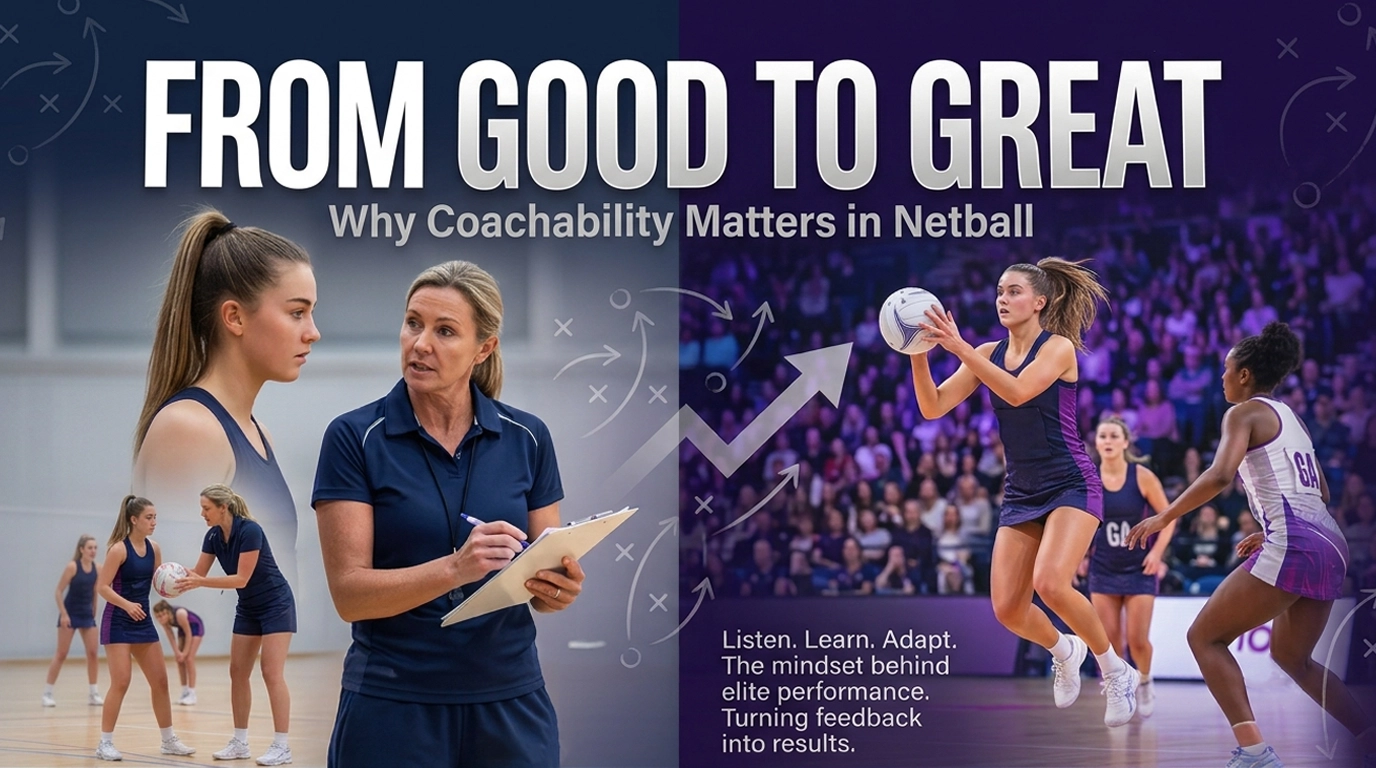
Talent can open doors in netball, but coachability is often what determines how far a player can go. The ability to learn, adapt, and respond positively to feedback is what transforms good players into great ones.
Coachability is more than simply following instructions. It is a mindset that reflects a player’s willingness to grow, improve, and embrace opportunities for development. Athletes who are coachable actively seek feedback, learn from their experiences, and consistently look for ways to elevate their performance.
What Does It Mean to Be Coachable?
A coachable netball player is someone who is willing to listen, learn, and apply feedback with purpose. It involves a combination of attitude, effort, and personal responsibility.
Being coachable means:
- Listening with purpose – valuing guidance and understanding what coaches are trying to teach.
- Embracing growth – recognising that there is always something new to learn, regardless of experience or ability.
- Taking action – turning feedback into meaningful improvements on the court, even if the progress is gradual.
Key Traits of Coachable Netball Players
Open-Mindedness
Coachable athletes welcome feedback and view it as an opportunity rather than a criticism. They remain receptive to new ideas and different ways of approaching the game.
Resilience
Mistakes are seen as learning opportunities, not failures. Coachable players can accept difficult feedback, recover quickly, and continue working toward improvement.
Self-Motivation
These athletes don’t wait to be pushed. They actively seek opportunities to develop their skills, attend training with enthusiasm, and put in extra effort when needed.
Humility
No matter how talented they are, coachable players understand that improvement never stops. They remain willing to learn from coaches, teammates, and experiences.
Strong Listening Skills
They focus during training, pay attention to instructions, and make a genuine effort to apply what they have been taught.
What Can Prevent Players From Being Coachable?
Several factors can limit a player’s ability to grow and develop.
Resistance to Feedback
Players who become defensive or dismissive when receiving advice often miss valuable learning opportunities.
Entitlement
Believing that talent alone is enough can create barriers to improvement. Players who think they no longer need coaching often stop progressing.
Negative Attitude
Complaining about drills, coaches, teammates, or training environments can prevent players from embracing challenges and learning from them.
Inconsistent Effort
True development happens during training, not just on game day. Players who only focus when competing often struggle to maximise their potential.
External Pressures
Sometimes parents can unintentionally affect a player’s coachability. When expectations become overwhelming, young athletes may feel pressured, overtrained, or fearful of disappointing others. Similarly, constant criticism of coaches, officials, or teammates can influence how players respond to feedback themselves.
Why Coachability Matters
Coachable players typically improve faster because they are willing to learn from every experience. They adapt more quickly, develop stronger relationships with teammates and coaches, and contribute positively to team culture.
Most coaches are not looking for perfection—they are looking for progress. They understand that mistakes are a natural part of learning and value athletes who are committed to growth.
Beyond netball, coachability is a skill that carries into every aspect of life. Whether in education, the workplace, or personal development, the ability to listen, accept feedback, and make improvements is invaluable.
The athletes who achieve long-term success are rarely the ones who rely solely on talent. They are the ones who remain curious, committed to learning, and willing to be coached every step of the way.
Because in netball—and in life—coachability is often the difference between staying good and becoming great.