





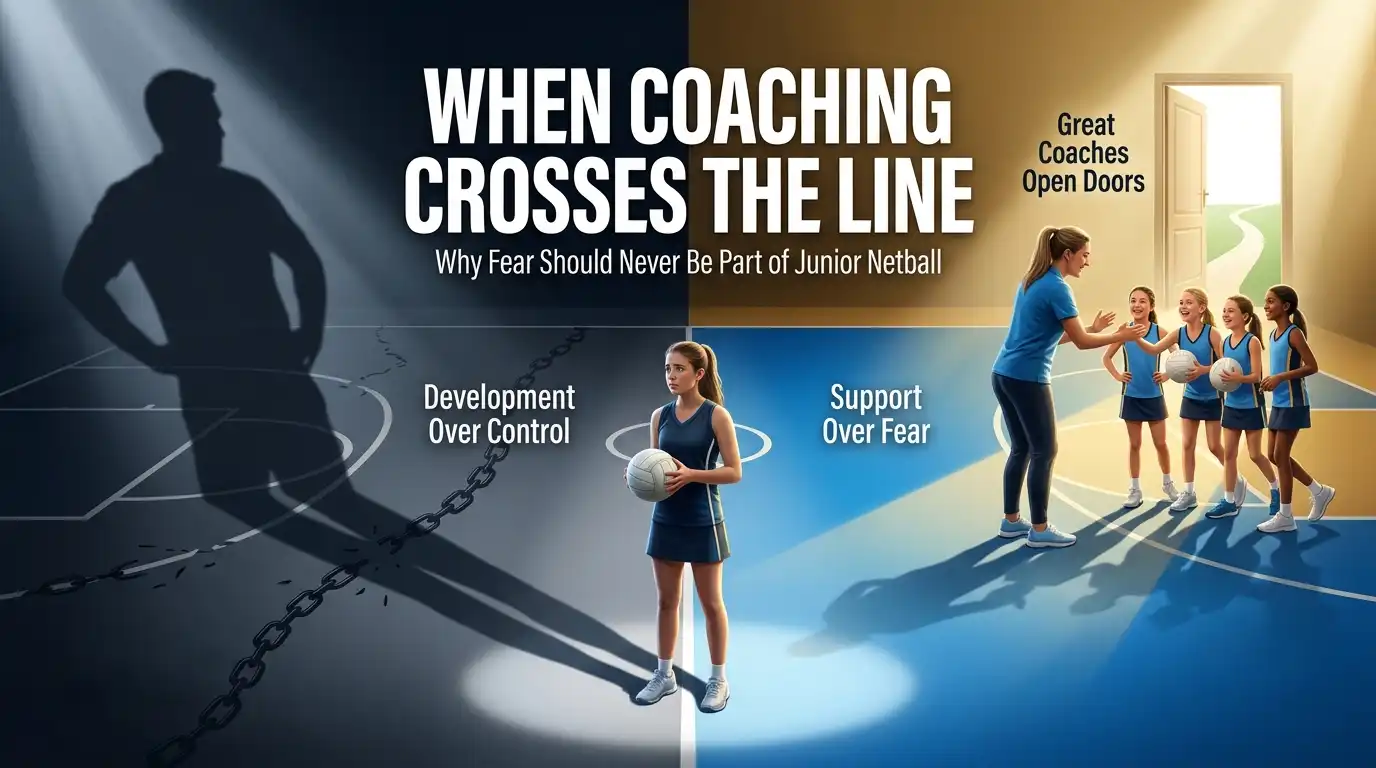
A concerning issue is beginning to emerge in junior netball, and it’s something the sporting community needs to address.
Increasingly, parents are sharing similar experiences:
- “We were told our child shouldn’t train with other programs.”
- “We were discouraged from attending trials elsewhere.”
- “We were warned that leaving could affect future selections.”
Sometimes these messages are delivered directly. Other times, they’re implied through subtle pressure.
Regardless of how they are communicated, using fear or intimidation to influence families is not effective coaching—it undermines the very purpose of youth sport.
The False Narrative of the “Only Way Forward”
Many of these situations revolve around the belief that one coach, club, or program controls an athlete’s future.
Families may hear statements such as:
- “I’m the person with the connections.”
- “Opportunities come through me.”
- “If you leave, those doors will close.”
These messages create the impression that a single individual holds complete control over a young athlete’s pathway.
The reality is very different.
Netball pathways are built through multiple opportunities, coaches, selectors, competitions, and development programs. Athletes grow at different stages, selection panels change, and sporting environments evolve over time.
No single coach determines a player’s future.
When influence is used to convince families they have no other options, it can create unnecessary pressure and dependency rather than genuine development.
Fear Is Not Development
A player should never feel that their future depends on remaining silent, staying in one environment, or avoiding other opportunities.
When fear becomes the primary reason a young athlete stays somewhere, growth often suffers.
Athletes may begin to:
- Avoid exploring new opportunities.
- Lose confidence in their own decision-making.
- Feel guilty about pursuing different experiences.
- Worry constantly about disappointing adults.
Over time, these pressures can contribute to burnout, anxiety, reduced confidence, and in some cases, a complete loss of enjoyment for the sport.
The effects are not always immediate, but they can have a lasting impact on a young athlete’s relationship with netball.
Great Coaches Create Opportunities
The strongest coaches understand that athlete development is rarely straightforward.
They recognize that:
- Every athlete develops at their own pace.
- Different coaching perspectives can be valuable.
- New experiences often accelerate learning.
- Confidence grows through support and encouragement.
- No single environment is the perfect fit forever.
Quality coaches do not fear athletes seeking additional development. They welcome it.
Rather than trying to keep players in one place, they focus on equipping them with the skills, confidence, and mindset to succeed wherever opportunities arise.
The goal should never be to hold athletes back—it should be to prepare them for what comes next.
What Parents Should Remember
If you ever hear messages such as:
- “You can’t train anywhere else.”
- “You shouldn’t trial for another team.”
- “Leaving here will hurt your future opportunities.”
Take a moment to evaluate the environment carefully.
A positive sporting environment should make young athletes feel:
- Supported
- Encouraged
- Valued
- Empowered
It should not rely on fear, pressure, or control to maintain loyalty.
Keeping the Purpose of Junior Sport in Focus
At its heart, junior sport exists to help young people develop—not only as athletes, but as confident, resilient individuals.
It should foster learning, enjoyment, growth, and personal development.
When an environment prioritizes control over development, it loses sight of what youth sport is meant to achieve.
Every young athlete deserves the freedom to learn, explore opportunities, and make decisions that support their growth.
No coach, club, or program owns a child’s future.
Trust your judgement. Trust your child’s experience.
The right environment will challenge athletes to grow—but it will never make them feel they have to give up their freedom to belong.