





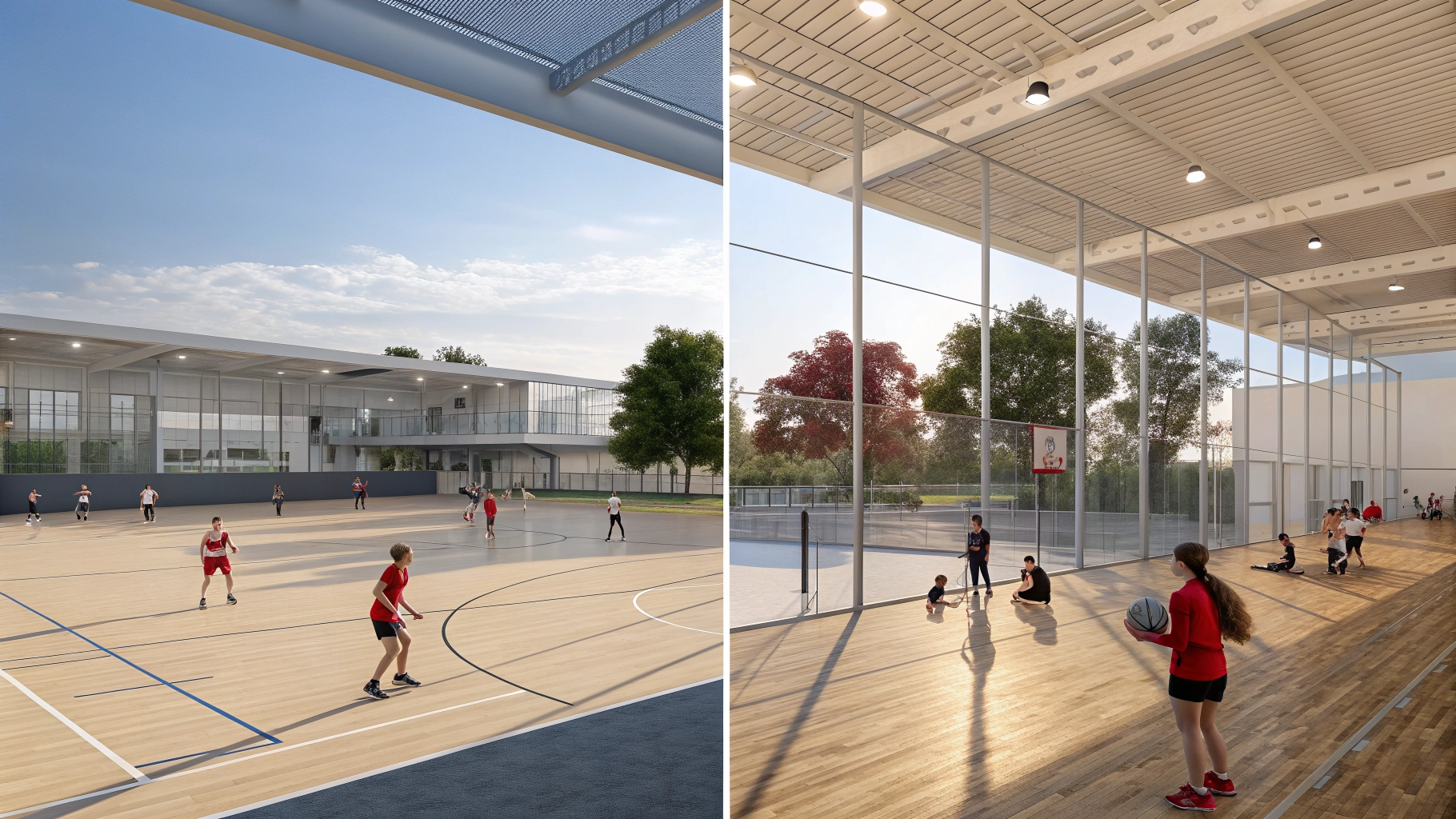
Both indoor and outdoor courts can be excellent places to play netball, but they offer different conditions. Indoor netball provides greater protection from rain, wind and changing weather, while outdoor netball offers an open-air environment and can be more convenient where community courts are readily available.
The right choice depends on what you need from your session. Weather, court surface, accessibility, cost, comfort and whether you’re training, competing or simply playing socially can all influence the decision.
For beginners, there is no need to overthink the choice. Start with a well-maintained court that is easy to access and suitable for your level of play. From there, you can decide whether you prefer the controlled conditions of an indoor venue or the flexibility of an outdoor court.
For more latest netball coverage, players and fans can also follow developments across the sport.
Indoor vs Outdoor Netball: What’s the Difference?
The fundamental difference between indoor and outdoor netball is the playing environment.
Indoor courts are enclosed, giving players much greater protection from external weather. Outdoor courts are exposed to conditions such as rain, wind, heat and cold.
However, the difference isn’t simply about having a roof over the court.
Other factors include:
- Weather: Indoor courts offer greater protection from the elements.
- Surface: Indoor and outdoor courts can have different playing surfaces and levels of grip.
- Availability: Outdoor community courts may be easier to access in some areas.
- Cost: Hire prices vary significantly between facilities.
- Comfort: Temperature, ventilation and weather exposure can affect the playing experience.
The individual venue matters, too. A well-maintained outdoor court may provide a better experience than a poorly maintained indoor facility.
Playing Netball Indoors
Playing netball indoors gives players a more controlled environment, making it particularly useful when unpredictable weather could interfere with a session.
Advantages of Playing Netball Indoors
The biggest advantage is reliability.
Rain won’t normally stop an indoor game, while wind is much less likely to affect the flight of the ball. This can make indoor venues useful for organised competitions and regular training sessions.
Other potential advantages include:
- Protection from rain and wind.
- More consistent playing conditions.
- Reliable sessions throughout the year.
- A controlled environment for training.
- Indoor facilities may offer changing rooms and spectator areas.
For players working on technical skills, consistent conditions can make it easier to focus on passing, shooting, footwork and tactical movement.
Potential Disadvantages of Indoor Netball
Indoor facilities can also have limitations.
Some areas have relatively few indoor courts, meaning players may need to travel further or book well in advance. Popular venues can also have limited availability during peak times.
Cost is another consideration. Indoor court hire varies between facilities and may be higher than using a public outdoor court.
Temperature and ventilation should also be considered. Being indoors doesn’t automatically mean a venue will be cool or comfortable.
Playing Netball Outdoors
Playing netball outdoors provides a different experience and can be particularly appealing for recreational players and community teams.
Outdoor courts can be convenient when there is a suitable facility nearby, allowing players to practise or organise casual games without relying on an indoor venue.
Advantages of Playing Netball Outdoors
Outdoor netball offers the opportunity to play in an open-air environment.
Depending on the location, players may also have access to public or community courts that are convenient for regular practice.
Potential benefits include:
- Fresh-air environment.
- Access to community courts.
- Convenient options for casual play.
- Opportunities for outdoor fitness and training.
- Potentially affordable court access.
Outdoor conditions can also challenge players to adapt. Passing, shooting and ball control may require adjustments when wind or temperature changes.
Potential Disadvantages of Outdoor Netball
The biggest drawback is exposure to weather.
Rain can make a court wet, while strong wind can affect the trajectory of the ball. Hot or cold conditions can also influence player comfort.
Court quality is another consideration. Outdoor surfaces can vary significantly depending on age, maintenance and location.
Players should be cautious of:
- Wet or slippery surfaces.
- Cracks or uneven areas.
- Standing water.
- Excessively worn surfaces.
- Poor lighting during evening sessions.
Indoor Netball vs Outdoor Netball: How Court Surfaces Affect Play
The indoor netball vs outdoor netball comparison should also consider the surface under your feet.
Netball involves frequent sprinting, stopping, pivoting and changes of direction. Players therefore need a surface that provides appropriate traction while allowing controlled movement.
The court surface can affect:
- Acceleration.
- Stopping and deceleration.
- Pivoting.
- Changes of direction.
- Jumping and landing.
- Overall confidence when moving at speed.
A court that is poorly maintained can create problems regardless of whether it is indoors or outdoors.
What Is the Best Surface for Playing Netball?
There is no single answer to the best surface for playing netball because the quality and condition of the individual court matter considerably.
A suitable surface should generally be:
- Even and well maintained.
- Free from significant cracks or damage.
- Able to provide appropriate grip.
- Free from standing water.
- Suitable for the footwear being used.
Players should also choose shoes designed to provide appropriate support and traction for the court they’re using.
Weather and Climate When Playing Netball Outdoors
Weather is one of the biggest considerations when deciding between indoor and outdoor play.
Rain and Wet Courts
Wet conditions can reduce traction and make sudden movements more difficult.
If a court has standing water or becomes visibly slippery, players should consider whether it remains safe to use.
Heat and Humidity
Hot weather can make physical activity more demanding.
Players should consider hydration, appropriate clothing and regular opportunities to rest, particularly during longer sessions or competitions.
Wind
Wind can make passing and shooting more challenging by changing the movement of the ball.
Players may need to adjust their technique and positioning when conditions become particularly windy.
How Indoor and Outdoor Netball Suit Different Types of Play
The most suitable environment can depend on what you’re trying to achieve.
Competitive Matches
For organised competition, consistent conditions can be important.
Indoor venues reduce the risk of weather disrupting a match, while outdoor competitions may be specifically organised around outdoor conditions.
Ultimately, the competition rules and venue requirements should determine where matches are played.
Training and Skill Development
Both environments can be useful for training.
Indoor sessions allow players to practise in controlled conditions, while outdoor sessions can introduce variables such as wind and temperature.
Training in different environments can help players learn how to adapt their technique when conditions change.
Casual and Social Netball
For recreational players, convenience may be the deciding factor.
A nearby outdoor court may be ideal for casual games, while an indoor venue could be preferable when players want greater protection from unpredictable weather.
You can also keep track of upcoming netball events when planning around larger competitions and fixtures.
Player Comfort and Safety
Whether you’re playing indoors or outdoors, preparation matters.
Before starting a session, consider:
- Wearing suitable netball shoes.
- Completing a proper warm-up.
- Checking the court surface.
- Staying hydrated.
- Wearing appropriate clothing.
- Considering temperature and ventilation.
- Avoiding visibly wet or damaged surfaces.
Outdoor players should pay particular attention to weather forecasts and changing conditions.
Indoor players should consider the venue’s ventilation and temperature, especially during longer sessions.
A court being indoors does not automatically make it safer, just as playing outdoors isn’t inherently unsafe. The condition of the facility and appropriate preparation are important in both environments.
Indoor vs Outdoor Netball: Which Should You Choose?
The answer depends on your circumstances rather than one format being universally better.
| If you prioritise… | Option to consider |
|---|---|
| Protection from rain | Indoor |
| Consistent conditions | Indoor |
| An open-air environment | Outdoor |
| Easy local access | Outdoor or either |
| Reliable year-round sessions | Indoor |
| Casual games | Either |
| Training | Either, depending on your goals |
| Competitive matches | Depends on the competition |
If weather reliability is your biggest concern, an indoor venue may be more suitable.
If you have convenient access to a quality outdoor court and enjoy playing outside, outdoor netball can be an excellent option.
What Beginners Should Look for in a Netball Court
Beginners don’t necessarily need to find a particular type of court. Instead, focus on the quality of the facility and whether it suits your needs.
Before choosing a venue, consider:
- Is the surface even and well maintained?
- Does it provide appropriate grip?
- Is the court adequately lit?
- Is there sufficient space around the playing area?
- Are useful facilities available?
- Is the venue easy to reach?
- Is the cost reasonable?
- Do your shoes suit the surface?
These practical considerations can have a greater impact on your experience than whether the court is indoors or outdoors.
Final Thoughts: Indoor or Outdoor Netball?
So, indoor netball vs outdoor netball isn’t really about choosing a universal winner.
Indoor courts provide greater protection from weather and generally offer more consistent conditions. Outdoor courts provide an open-air alternative and can be convenient for casual games, training and community play.
The most important factors are the quality of the court, playing surface, weather, accessibility, comfort and purpose of the session.
Whether you’re completely new to netball or an experienced player, a suitable and well-maintained court will give you the best foundation for an enjoyable session.
For players interested in following results and performance beyond their own games, netball rankings and match stats can provide useful context on the wider sport.
The best choice is ultimately the one that fits your location, playing goals and conditions.
Do you prefer playing netball indoors or outdoors?